

iPSC-RESET-#21
The cell line is not validated yet.
MULi001-A
General
iPSC Line |
|
| hPSCreg name | MULi001-A |
| Cite as: | MULi001-A |
| Alternative name(s) |
iPSC-RESET-#21
|
| iPSC line type | Human induced pluripotent stem cell (hiPSC) |
| Similar iPSC lines |
|
| Last update | 3rd February 2026 |
| User feedback | |
Provider |
|
| Generator |
Medical University of Lodz (MUL)
Contact:
Medical University of Lodz (MUL) |
| Owner | Medical University of Lodz (MUL) |
| Distributors | |
| Derivation country | Poland |
External iPSC Databases |
|
| BioSamples | SAMEA121241158 |
General iPSC Information |
|
| Publications | |
| * Is the cell line readily obtainable for third parties? |
Yes Research use: allowed
Clinical use: not allowed
Commercial use: not allowed
|
Donor Information
General Donor Information |
|
| Sex | female |
| Ethnicity | Caucasian |
Phenotype and Disease related information (Donor) |
|
| Diseases | A disease was diagnosed.
|
| Disease associated phenotypes |
|
Karyotyping (Donor) |
|
| Has the donor karyotype been analysed? |
Yes
|
Other Genotyping (Donor) |
|
| Is there genome-wide genotyping or functional data available? |
No
|
External Databases (Donor) |
|
| BioSamples | SAMEA121241159 |
Ethics
| Has informed consent been obtained from the donor of the embryo/tissue from which the pluripotent stem cells have been derived? | Yes |
| Was the consent voluntarily given? | Yes |
| Has the donor been informed that participation will not directly influence their personal treatment? | Yes |
| Can you provide us with a copy of the Donor Information Sheet provided to the donor? | No |
| Do you (Depositor/Provider) hold the original Donor Consent Form? | Yes |
| Alternatives to consent are available? | No |
| Is there other documentation provided to the donor for consenting purposes? | No |
| Confirm that consent was obtained by a qualified professional | Yes |
| Has the donor agreed to be re-contacted? | Unknown |
| Has the donor been informed about how her/his data will be protected? | Yes |
| Please indicate whether the data associated with the donated material has been pseudonymised or anonymised. | pseudonymised |
| Does consent explicitly allow the derivation of pluripotent stem cells? | No |
| * Does consent expressly prevent the derivation of pluripotent stem cells? | No |
| * Does consent pertain to a specific research project? | No |
| Does consent permit unforeseen future research, without further consent? | Yes |
| Does the consent permit uses of donated embryo/tissue or derived cell line intended for clinical treatment or human applications? | No |
| Does consent expressly prevent development of commercial products? | No |
| Does consent expressly prevent financial gain from any use of the donated embryo/tissue, including any product made from it? | No |
| Does consent expressly permit storage of donated embryo/tissue for an unlimited time? | Yes |
| Does consent expressly permit storage of cells derived from the donated embryo/tissue for an unlimited time? | No |
| Does consent prevent the DONATED BIOSAMPLE from being made available to researchers anywhere in the world? | No |
| Does consent prevent CELLS DERIVED FROM THE DONATED BIOSAMPLE from being made available to researchers anywhere in the world? | No |
Does consent permit research by | |
| an academic institution? | Yes |
| a public organisation? | Yes |
| a non-profit company? | No |
| a for-profit corporation? | No |
| Does consent expressly permit collection of genetic information? | Yes |
| Does consent expressly permit storage of genetic information? | Yes |
| Does consent prevent dissemination of genetic information? | No |
| Has the donor been informed that their donated biosample or derived cells may be tested for the presence of microbiological agents / pathogens? | No |
| Has the donor consented to receive information discovered during use of donated embryo/tissue that has significant health implications for the donor? | No |
| How may genetic information associated with the cell line be accessed? | Controlled Access |
| Will the donor expect to receive financial benefit, beyond reasonable expenses, in return for donating the biosample? | No |
| Does the consent anticipate that the donor will be notified of results or outcomes of any research involving the donated samples or derived cells? | No |
| Does the consent permit the donor, upon withdrawal of consent, to stop the use of the derived cell line(s) that have already been created from donated samples? | No |
| Does the consent permit the donor, upon withdrawal of consent, to stop delivery or use of information and data about the donor? | No |
| Does consent permit access to medical records of the donor? | No |
| Does consent permit access to any other source of information about the clinical treatment or health of the donor? | No |
| Has a favourable opinion been obtained from a research ethics committee, or other ethics review panel, in relation to the Research Protocol including the consent provisions? | Yes |
| Name of accrediting authority involved? | Local Ethical Committee at the Medical University of Lodz |
| Approval number | RNN/74/25/KE, 11 February 2025 |
| Has a favourable opinion been obtained from a research ethics committee, or other ethics review panel, in relation to the PROPOSED PROJECT, involving use of donated embryo/tissue or derived cells? | No |
| Do you have obligations to third parties in regard to the use of the cell line? | No |
| Are you aware of any further constraints on the use of the donated embryo/tissue or derived cells? | No |
| Is there an MTA available for the cell line? | Yes |
| For generation of the cell line, who was the supplier of any recombined DNA vectors or commercial kits used? | Addgene |
| Are you aware of any constraints on the use or distribution of the cell line from the owner or any parties identified in the query above? | No |
iPSC Derivation
General |
|
| Source cell type | |
| Source cell type (free text) | Exfoliated urinary tract epithelial cells (isolated from urine samples) |
| Passage number reprogrammed | 2 |
Reprogramming method |
|
| Vector type | Non-integrating |
| Vector | Episomal |
| Genes | |
| Is reprogramming vector detectable? |
No |
| Methods used |
PCR
|
| Notes on reprogramming vector detection | end-point PCR analysis targeting the oriP |
Vector free reprogramming |
|
Other |
|
| Selection criteria for clones | morphology |
| Derived under xeno-free conditions |
No |
| Derived under GMP? |
No |
| Available as clinical grade? |
No |
iPSC Culture Conditions
| Surface coating | Matrigel/Geltrex |
| Feeder cells |
No |
| Passage method |
Enzyme-free cell dissociation
EDTA
|
| O2 Concentration | 21 % |
| CO2 Concentration | 5 % |
| Medium |
Essential 8™ Flex
|
| Has Rock inhibitor (Y27632) been used at passage previously with this iPSC line? | Yes |
| Has Rock inhibitor (Y27632) been used at cryo previously with this iPSC line? | Yes |
| Has Rock inhibitor (Y27632) been used at thaw previously with this iPSC line? | Yes |
iPSC Characterisation
Analysis of undifferentiated iPSCs
| Marker | Expressed | Immunostaining | RT-PCR | Flow Cytometry | Enzymatic Assay | Expression Profiles |
| Alkaline Phosphatase |
Yes |
|||||
| POU5F1 (OCT-4) |
Yes |
|||||
| NANOG |
Yes |
|||||
| SOX2 |
Yes |
|||||
| TRA 1-60 |
Yes |
|||||
| TRA 1-81 |
Yes |
Score:
| Marker | Present | Absent |
| mCpG | ||
| OCT4 |
Zrzut ekranu 2026-02-3 o 18.26.58.png
Bright field
Differentiation Potency
In vitro directed differentiation
Morphology
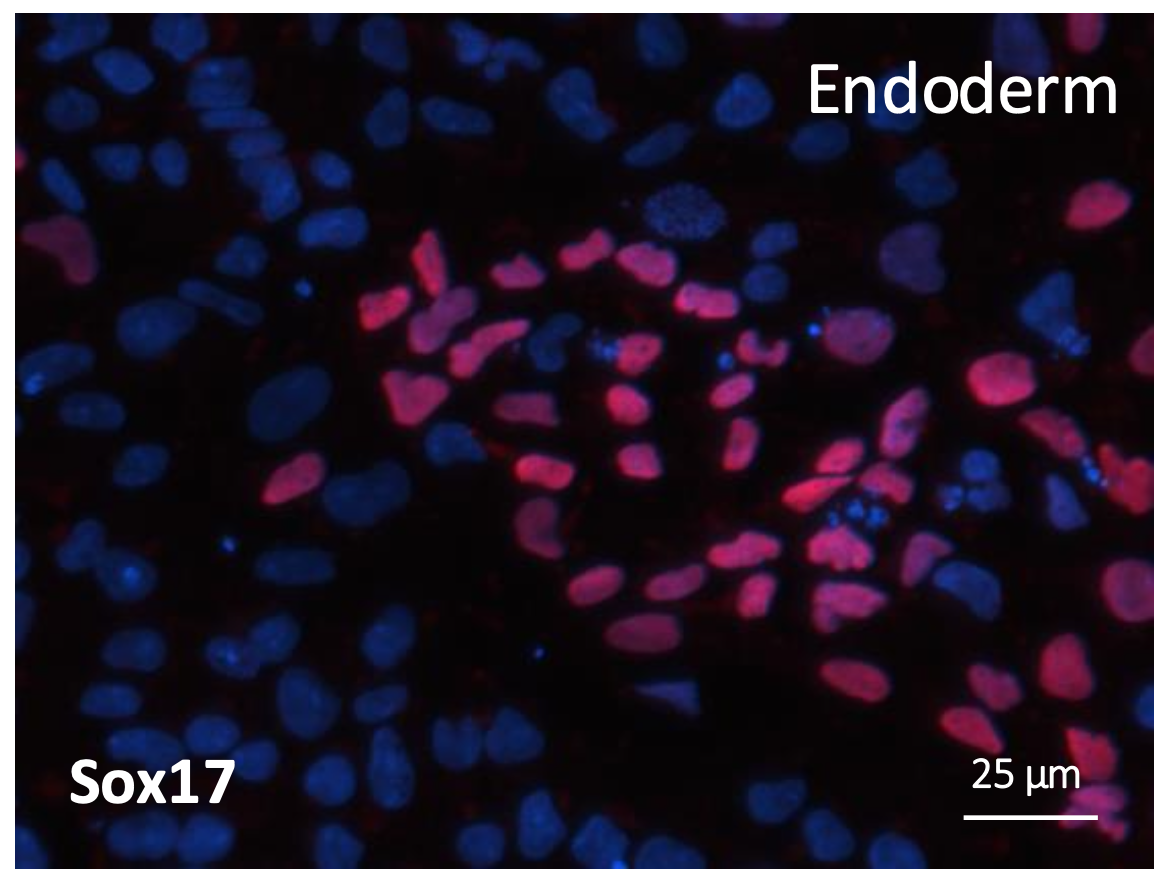
Sox17
In vitro directed differentiation
| Marker | Expressed |
| alpha-actinin-1 |
Yes |
| HAND1 |
Yes |
| HOXB7 |
Yes |
Morphology
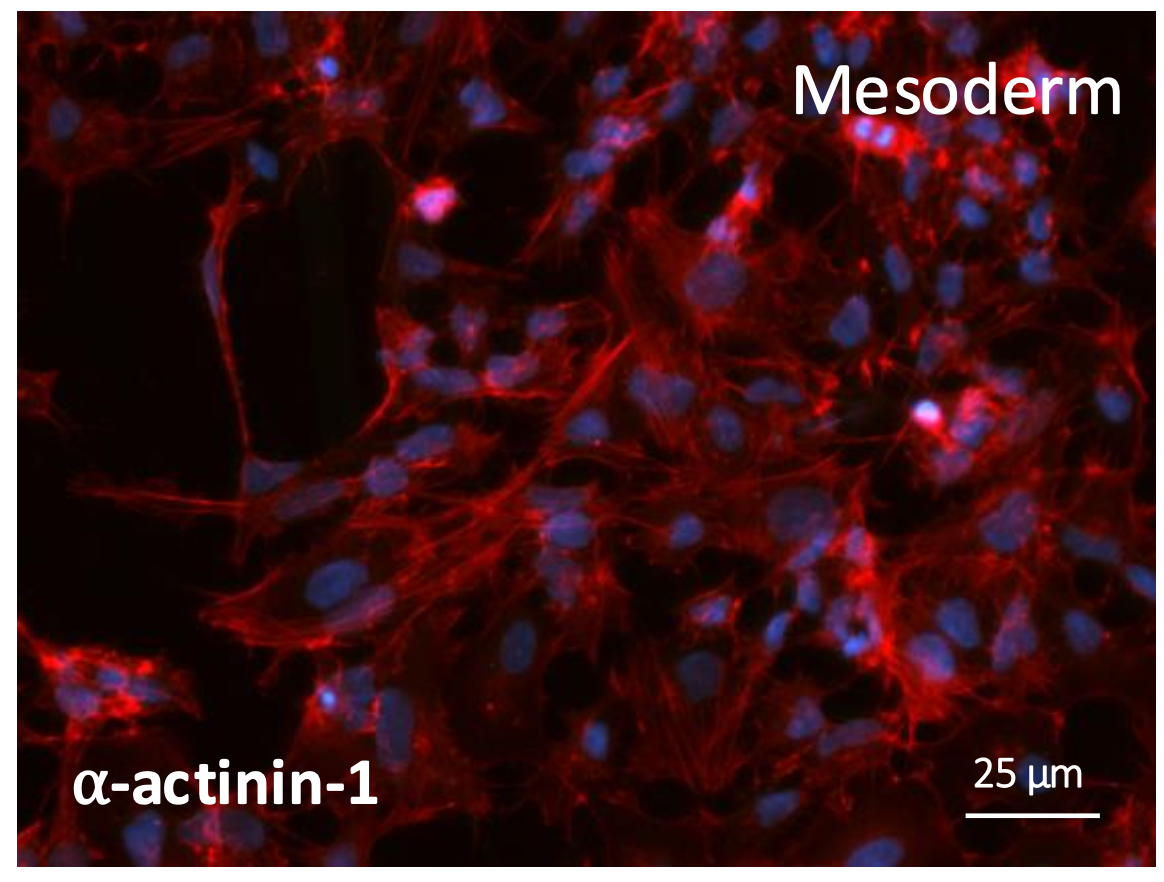
alpha-actinin 1
In vitro directed differentiation
| Marker | Expressed |
| beta-tubulin III |
Yes |
| HES5 |
Yes |
| PAX6 |
Unknown |
Morphology
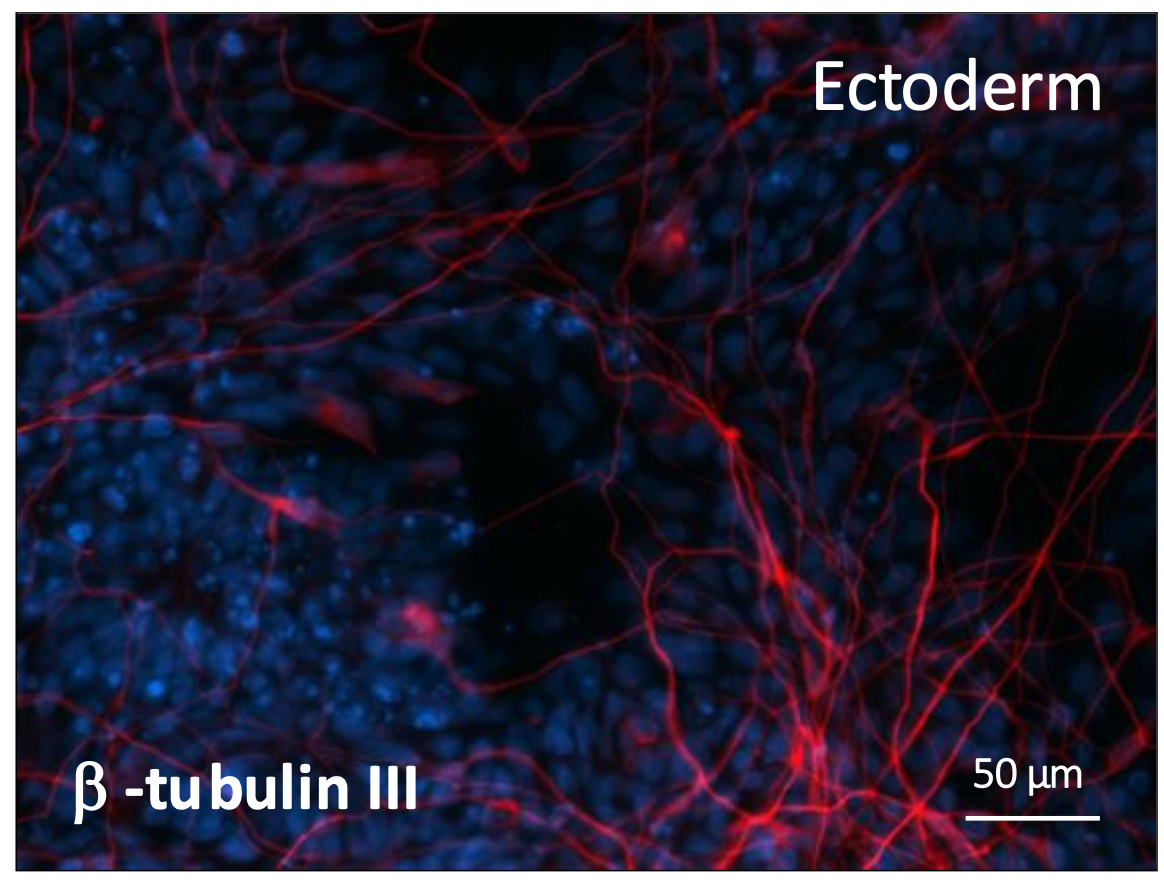
beta-tubulin III
Microbiology / Virus Screening |
|
| Mycoplasma | Negative |
Genotyping
Karyotyping (iPSC Line) |
|
| Has the iPSC line karyotype been analysed? |
Yes
|
Other Genotyping (iPSC Line) |
|
Login to share your feedback, experiences or results with the research community.