

MURAi007-A
General
iPSC Line |
|
| hPSCreg name | MURAi007-A |
| Cite as: | MURAi007-A |
| iPSC line type | Human induced pluripotent stem cell (hiPSC) |
| Similar iPSC lines | No similar lines found. |
| Last update | 21st August 2026 |
| User feedback | |
Provider |
|
| Generator | Faculty of Medicine Ramathibodi Hospital (MURA) |
| Owner | Faculty of Medicine Ramathibodi Hospital (MURA) |
| Distributors | |
| Derivation country | Thailand |
External iPSC Databases |
|
| BioSamples | SAMEA120251847 |
General iPSC Information |
|
| Publications | |
| * Is the cell line readily obtainable for third parties? |
No |
Donor Information
General Donor Information |
|
| Sex | male |
| Ethnicity | Thai |
Phenotype and Disease related information (Donor) |
|
| Diseases | A disease was diagnosed.
|
Karyotyping (Donor) |
|
| Has the donor karyotype been analysed? |
No
|
Other Genotyping (Donor) |
|
| Is there genome-wide genotyping or functional data available? |
No
|
External Databases (Donor) |
|
| BioSamples | SAMEA120251848 |
Ethics
| Has informed consent been obtained from the donor of the embryo/tissue from which the pluripotent stem cells have been derived? | Yes |
| Was the consent voluntarily given? | Yes |
| Has the donor been informed that participation will not directly influence their personal treatment? | Yes |
| Can you provide us with a copy of the Donor Information Sheet provided to the donor? | Yes |
| Do you (Depositor/Provider) hold the original Donor Consent Form? | Yes |
| Alternatives to consent are available? | No |
| Please indicate whether the data associated with the donated material has been pseudonymised or anonymised. | pseudonymised |
| Does consent explicitly allow the derivation of pluripotent stem cells? | Yes |
| * Does consent expressly prevent the derivation of pluripotent stem cells? | No |
| * Does consent pertain to a specific research project? | Yes |
| Details on restriction to research project | |
| Does consent prevent CELLS DERIVED FROM THE DONATED BIOSAMPLE from being made available to researchers anywhere in the world? | Yes |
Does consent permit research by | |
| an academic institution? | Yes |
| a public organisation? | No |
| a non-profit company? | No |
| a for-profit corporation? | No |
| How may genetic information associated with the cell line be accessed? | Controlled Access |
| Will the donor expect to receive financial benefit, beyond reasonable expenses, in return for donating the biosample? | Yes |
| Has a favourable opinion been obtained from a research ethics committee, or other ethics review panel, in relation to the Research Protocol including the consent provisions? | Yes |
| Name of accrediting authority involved? | Ethics Committee on Human Right Related to Research Involving Human Subjects, Faculty of Medicine Ramathibodi Hospital, Mahidol University,Thailand |
| Approval number | MURA2024/467 |
| Has a favourable opinion been obtained from a research ethics committee, or other ethics review panel, in relation to the PROPOSED PROJECT, involving use of donated embryo/tissue or derived cells? | Yes |
| Name of accrediting authority involved? | Ethics Committee on Human Right Related to Research Involving Human Subjects, Faculty of Medicine Ramathibodi Hospital, Mahidol University,Thailand |
| Approval number | MURA2024/467 |
| Do you have obligations to third parties in regard to the use of the cell line? | No |
| For generation of the cell line, who was the supplier of any recombined DNA vectors or commercial kits used? | |
iPSC Derivation
General |
|
| Source cell type |
Blood stem cells found in the circulation after being stimulated to leave the bone marrow, usually by treatment with a cytokine or other drug.
Synonyms
|
Reprogramming method |
|
| Vector type | Non-integrating |
| Vector | Episomal |
| Is reprogramming vector detectable? |
No |
| Methods used |
PCR
|
Vector free reprogramming |
|
| Type of used vector free reprogramming factor(s) |
mRNA
|
Other |
|
| Selection criteria for clones | marker expression, morphology |
| Derived under xeno-free conditions |
No |
| Derived under GMP? |
No |
| Available as clinical grade? |
No |
iPSC Culture Conditions
| Surface coating | Matrigel/Geltrex |
| Feeder cells |
No |
| Passage method | Non-enzymatic EDTA-based dissociation |
| O2 Concentration | 5 % |
| CO2 Concentration | 5 % |
| Medium | mTeSR™ Plus |
| Has Rock inhibitor (Y27632) been used at passage previously with this iPSC line? | Yes |
| Has Rock inhibitor (Y27632) been used at cryo previously with this iPSC line? | No |
| Has Rock inhibitor (Y27632) been used at thaw previously with this iPSC line? | Yes |
iPSC Characterisation
Analysis of undifferentiated iPSCs
Self-renewal
Positive
Endoderm
Positive
Mesoderm
Positive
Ectoderm score
Positive
Pluripotency Assessment
Human induced pluripotent stem cells (iPSCs) were maintained in mTeSR™ Plus medium supplemented according to the manufacturer's recommendations for 3 days prior to analysis. Total RNA was extracted from undifferentiated cultures and reverse-transcribed into complementary DNA (cDNA) using the iScript™ Reverse Transcription Supermix kit (Bio-Rad).
Quantitative real-time PCR (RT-qPCR) was performed to evaluate the expression of pluripotency-associated genes, including OCT4 (POU5F1), SOX2, NANOG, TDGF1, DNMT3B, GABRB3, and GDF3. Gene expression levels were normalized to ACTB (β-actin) as the endogenous housekeeping control. The expression profile confirmed the maintenance of pluripotency in the generated iPSC line. Detailed RT-qPCR results are provided in the attached file (pluripotency_marker2.pdf).
In Vitro Differentiation Potential
To evaluate trilineage differentiation potential, undifferentiated iPSCs were plated and maintained in mTeSR™ Plus medium. After 24 hours, the culture medium was replaced with lineage-specific differentiation media to induce differentiation toward ectodermal, mesodermal, and endodermal lineages.
Following differentiation, total RNA was isolated and analyzed by RT-qPCR. Lineage-specific marker expression was assessed using primers targeting PAX6 and MAP2 (ectoderm), TBX6 and TBXT (Brachyury) (mesoderm), and SOX17 and FOXA2 (endoderm). The differentiated cultures exhibited increased expression of markers representative of all three germ layers, demonstrating the trilineage differentiation capacity of the iPSC line. Representative RT-qPCR data are provided in the attached file (IMG_5296.JPG).
Pluripotency marker 2.pdf
Pluripotency was assessed by qPCR analysis of OCT4, SOX2, NANOG, TDGF1, DNMT3B, GABRB3, and GDF3 in undifferentiated cells
IMG_5296.JPG
Trilineage differentiation potential was demonstrated by induction of ectoderm markers (PAX6, MAP2), mesoderm markers (TBX6, TBXT), and endoderm markers (SOX17, FOXA2) following differentiation
Differentiation Potency
In vitro directed differentiation
Morphology
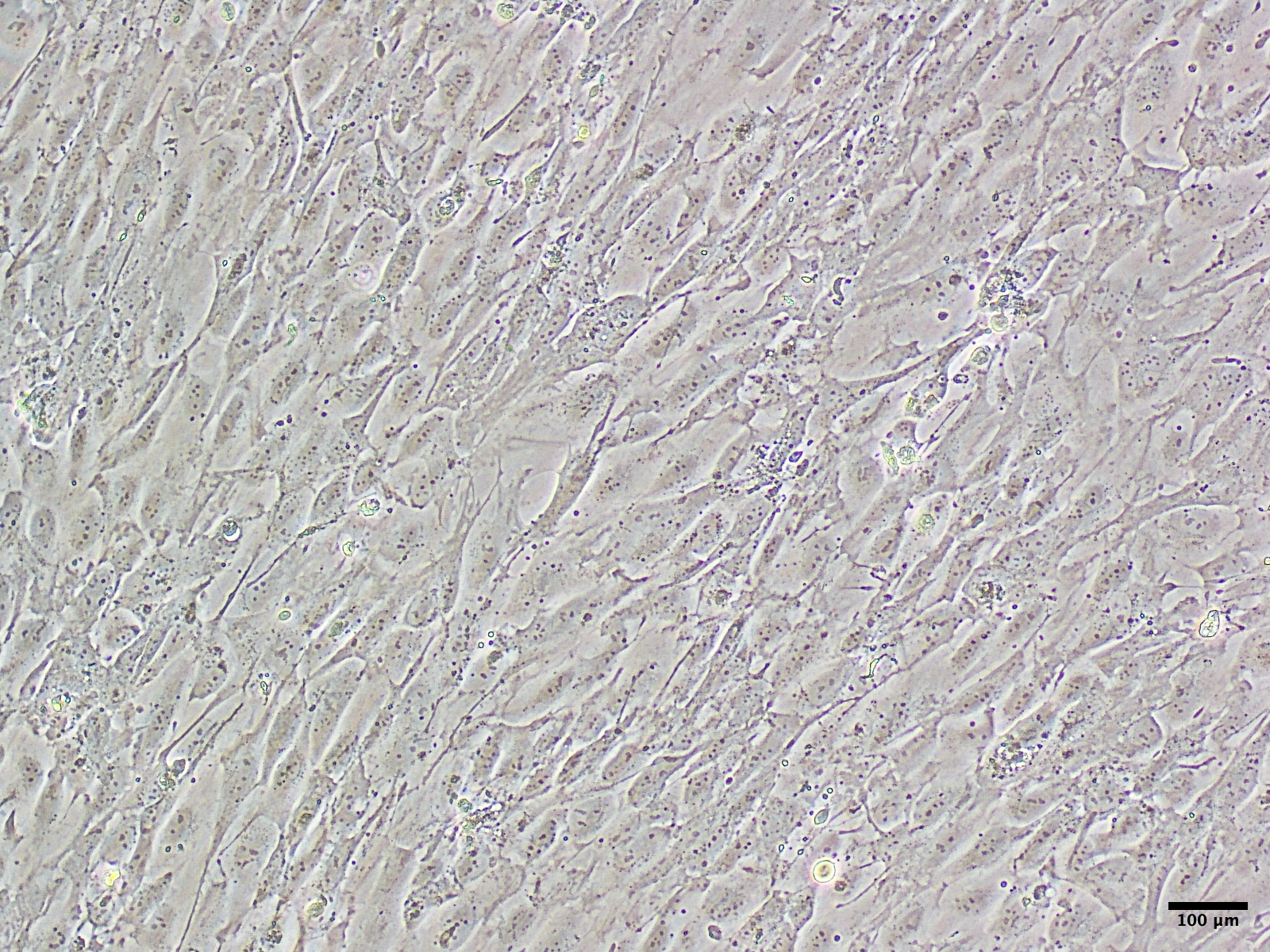
Protocol or reference
In vitro directed differentiation
Morphology
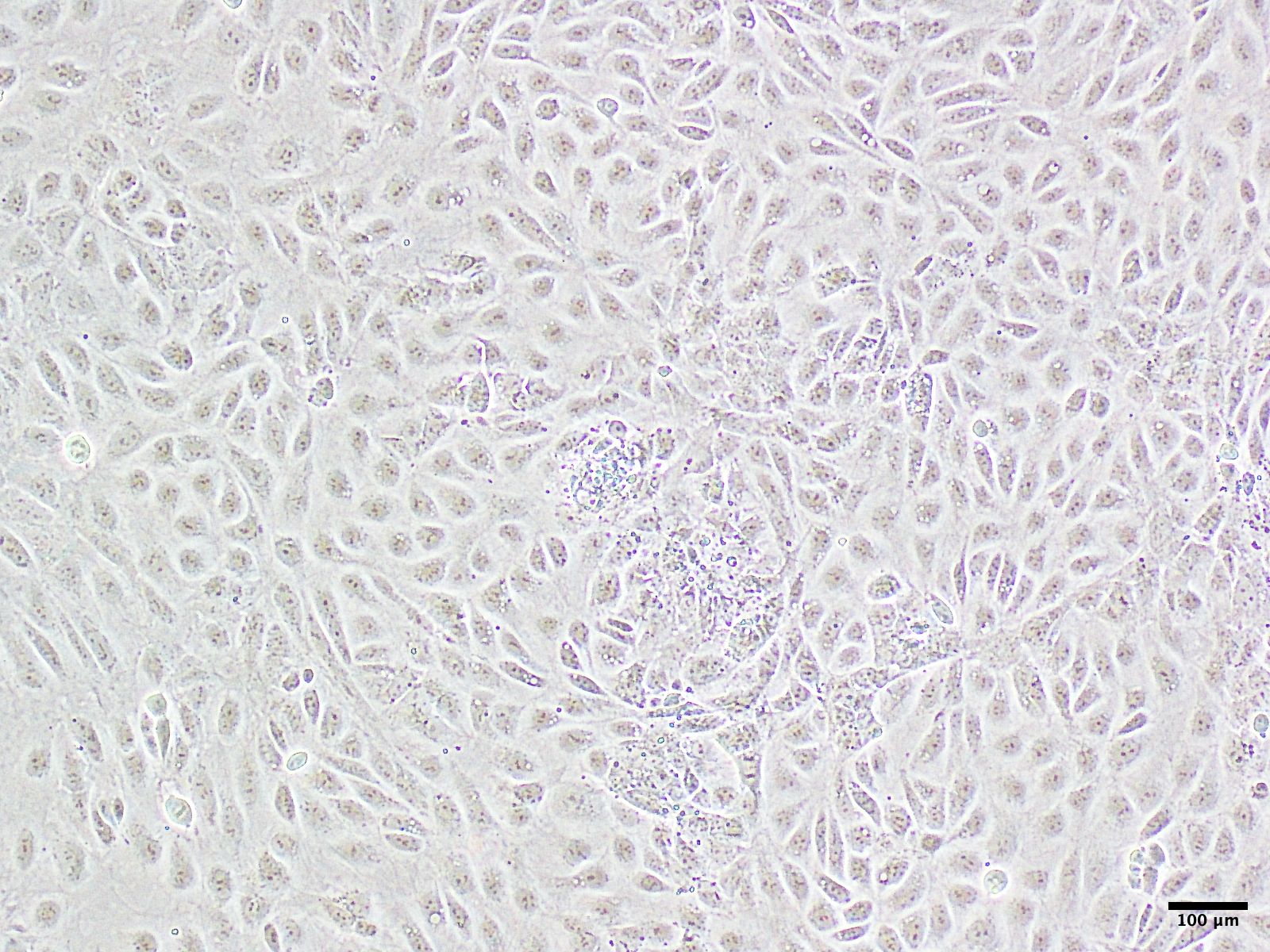
Protocol or reference
In vitro directed differentiation
Morphology
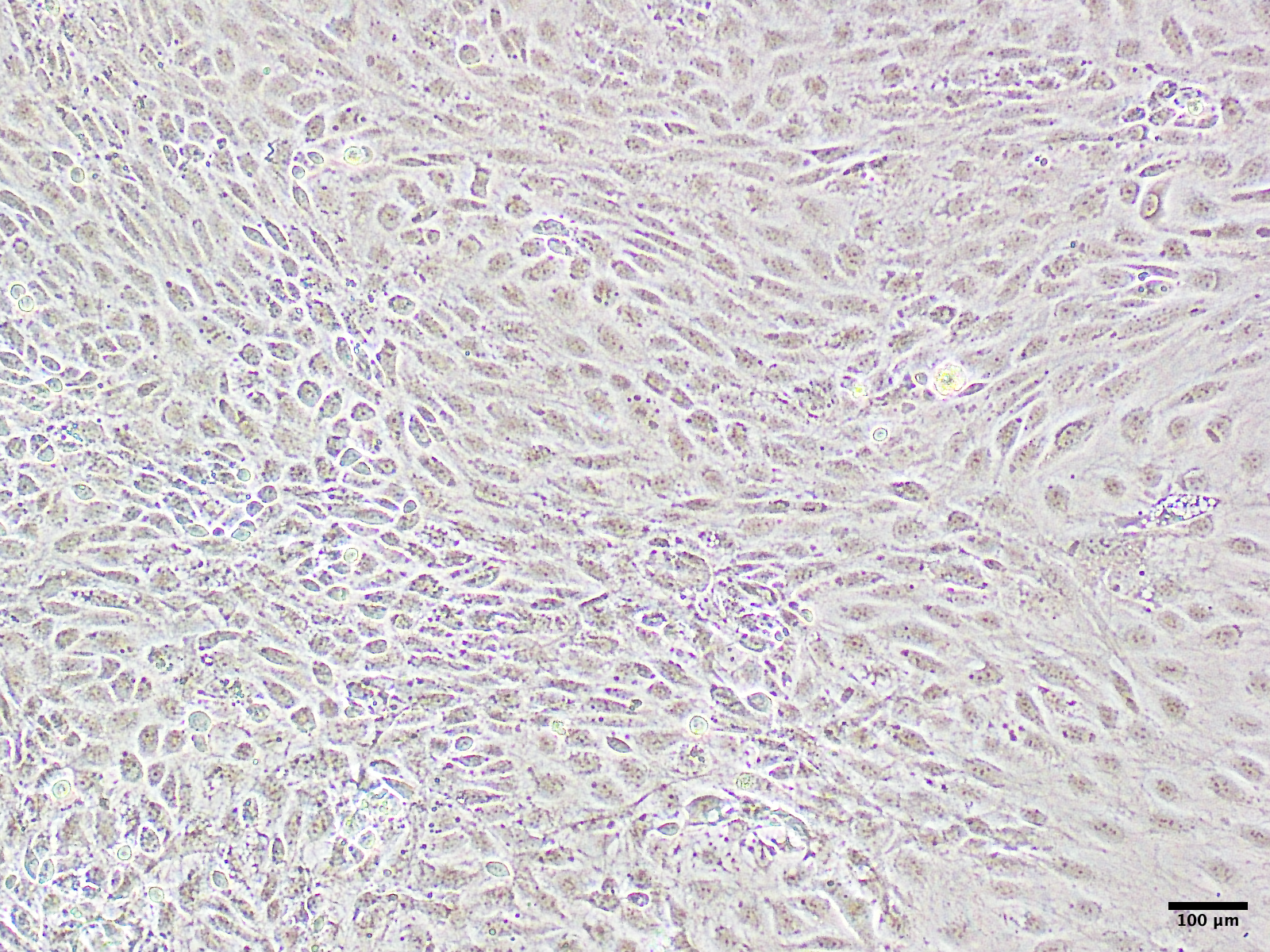
Protocol or reference
Microbiology / Virus Screening |
|
| Mycoplasma | Negative |
Genotyping
Karyotyping (iPSC Line) |
|
| Has the iPSC line karyotype been analysed? |
Yes
|
Other Genotyping (iPSC Line) |
|
Login to share your feedback, experiences or results with the research community.